Resilient by Design

Resilience is treated as the cost of growth. In a decade where the disruption never stops, it is the condition for it, and it has to be built into the operating system rather than bolted on after the shock.

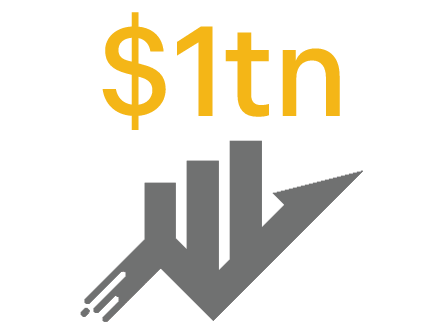
UAE non-oil trade in 2025, a record reached as the economy diversified

UAE non-oil foreign trade passed $1 trillion for the first time in 2025, up 27%, and it did so as the economy diversified rather than despite it, with the non-oil export share rising from 14.1% in 2019 to 21.6% (UAE Federal Competitiveness and Statistics Centre; WTO, 2026).

THE SIGNAL

In April 2026 the UAE approved a national programme to strengthen supply-chain resilience; weeks later, Dubai positioned economic resilience as the way to stay on a high-growth path. Read together, they describe a posture rather than two announcements: resilience treated as a growth strategy, not a defensive cost. The timing is not incidental. The World Economic Forum’s 2026 risk survey finds half of global leaders expecting the next two years to be turbulent or stormy, a rise of fourteen points in a single year, and names uncertainty the defining condition. The shocks that used to be interruptions have become the climate. For boards across the GCC and Africa, the question is no longer how to recover from disruption, but how to keep growing inside it.

WHY IT MATTERS HERE

For governments, resilience has moved from contingency planning to economic strategy: securing food, medicine and industrial inputs is now a competitiveness question, not an emergency one. For large operators, the disruption is structural and continuous, with 86% of employers expecting AI to reshape their business by 2030 and 39% of workers’ core skills disrupted by then. For family enterprises, concentration is the exposure, because the supplier or market that looked efficient in calm conditions becomes the fault line in a shock. For Africa the stakes are sharpest of all, as a fast-rising food-import bill turns a distant shock into a domestic budget crisis. The thread is the same everywhere: resilience is no longer what you buy after the shock but what you build before it, because there is no longer an afterwards.

THE SYNARCHY READ

The familiar framing makes resilience and growth enemies. Resilience means buffers, redundancy, second suppliers and held reserves, and that slack reads as the opposite of the lean, optimised machine that growth is supposed to demand. So resilience gets filed as insurance, a cost the risk committee defends and the growth agenda resents.

Every framework is context wearing a disguise.

That was never the real choice. There is a serious version of the opposing case, and it deserves stating plainly: resilience is inefficiency by another name, the excess inventory and duplicated suppliers and capital tied up in slack that a leaner rival would return to its shareholders. In a stable, globalising world that view was largely correct, for single-sourcing and just-in-time delivery were the rational design and redundancy really was waste. It stops holding the moment disruption becomes permanent, because the value of being able to keep operating through a shock then exceeds the cost of carrying the slack that makes it possible. The evidence now runs the other way. The IMF finds that diversification, one of the core mechanisms of resilience, is associated with sharp growth accelerations and lower volatility, and judges in its 2026 outlook that economies with diversified bases hold more resilient growth than concentrated ones. That is why resilience is no longer the tax on growth but increasingly the mechanism of it.

Engineers have understood the principle for a long time. A bridge built with no tolerance, carrying no more than the load already upon it, is not efficient but precarious, a single heavy truck away from failure; its margin is not waste but the design. A supply chain, a balance sheet or an operating model built without tolerance fails in exactly the same way, and for the same reason. The region’s own posture makes the timing plain, because disruption no longer ends. When shocks were episodic, an institution could run lean and rebuild afterwards; when they are continuous, with AI churning skills and business models and with supply chains and capital repricing on distant events, there is no afterwards in which to rebuild. Resilience bolted on always arrives late, because the institutional response moves slower than the reality it answers to. The only kind that holds is designed into the operating system from the start, diversified by default and able to sense a shock early and bend without breaking.

The most resilient systems are built that way deliberately. The Netherlands treats the management of water as foundational infrastructure rather than as contingency, and Singapore approaches food security through the careful diversification of its supply; neither was improvised after a disaster, and in both resilience was authored into the system as a condition of operating at all. The region has the same authoring advantage. The UAE did not diversify and then grow; its non-oil economy passed a trillion dollars in trade as it diversified, the two rising together. The instruction for every institution is the same: stop treating resilience as the price of ambition, author it into the model and fit it to your own exposures, and it becomes what lets the ambition survive the decade.

Resilience was never the cost of growth. It’s the condition for it.

THE EVIDENCE

leaders expecting turbulent 2 years

650+

Disruption is the baseline now.

Half of the 1,300-plus leaders in the WEF’s 2026 risk survey expect a turbulent or stormy two years, a rise of fourteen points in a year, and warn that interconnected shocks can outpace institutional response. (WEF, Global Risks Report 2026)

Diversified

economies

Diversified economies grow more, not less.

The IMF finds diversification associated with growth accelerations and lower volatility, and judges diversified economies to hold more resilient growth than concentrated ones. (IMF, World Economic Outlook 2026)

UAE non-oil trade up

27%

The region built the proof.

UAE non-oil trade passed $1 trillion in 2025, up 27%, as the non-oil export share climbed from 14.1% to 21.6% since 2019, paired with D33’s target to double Dubai’s economy by 2033. (Federal Competitiveness and Statistics Centre; WTO; D33)

$65 billion

Sub-saharan food imports

For Africa it is existential.

Sub-Saharan food imports are projected near $65 billion in 2025, a third straight rise, which is the case for designing resilience in rather than bolting it on. (FAO, Food Outlook 2025)

THREE MOVES

01

Design for the shock you’re in, not the one that passed.
Treat resilience as a standing capability in the operating model, not a post-crisis project. The test is whether the business can absorb a disruption it has not seen yet, not whether it recovered from the last one. Build the sensing, the slack and the decision speed before you need them, because the window to build closes once the shock lands.

02

Make diversification a growth lever, and measure it as one.
Diversify sources, markets, suppliers, funding and talent, and put diversification on the growth scorecard, not the cost ledger. The UAE’s widening export base and its trade-agreement programme show diversification compounding into growth, not subtracting from it. Concentration is the efficiency that looks brilliant until the day it doesn’t.

03

Author it to your own exposures.
Generic resilience is wasted motion. Map the dependencies that are actually yours, whether the supplier, the market, the funding source or the scarce skill, and build the specific resilience your model needs, rather than importing a template designed for someone else’s vulnerabilities. The region’s own programmes do exactly this: name the priority dependencies first, then build to them.

THE EDGE

The disruptions will not pause for anyone to catch up. The institutions that keep growing through this decade will be the ones that stopped treating resilience as the cost of growth and built it in as the condition for it.

Sources: World Economic Forum, Global Risks Report 2026 and Future of Jobs Report 2025; International Monetary Fund, World Economic Outlook (2026) and diversification research; UAE Federal Competitiveness and Statistics Centre and World Trade Organization (2025 trade data); Dubai Economic Agenda D33; UAE Cabinet, National Programme to Strengthen Supply Chain Resilience (2026); FAO, Food Outlook (2025).

The Synarchy Edge is Synarchy Consulting’s monthly thought-leadership series on the structural shifts — in strategy, capital, technology, talent and governance — reshaping how institutions across the GCC and Africa compete and endure.

Thank you! Your submission has been received!
Oops! Something went wrong while submitting the form.

Do you want to embark on an inspiring journey that drives growth and impact? Join us to create excellence together